EAA or Whey Protein: What Is the Difference

EAA (essential amino acids) and whey protein are often presented as interchangeable products for muscle growth. Both do supply essential amino acids, but they do so in fundamentally different ways: one as free molecules, the other as part of a whole protein with its own structure and biologically active fractions. The editorial team explains what follows from this.
Composition: nine amino acids versus whole protein
EAA supplements contain nine essential amino acids in free form: leucine, isoleucine, valine, lysine, methionine, phenylalanine, threonine, tryptophan and histidine. These are precisely the amino acids that the body does not synthesize, so their intake from food is obligatory. The ratio among them differs across products and is not always disclosed by the manufacturer.
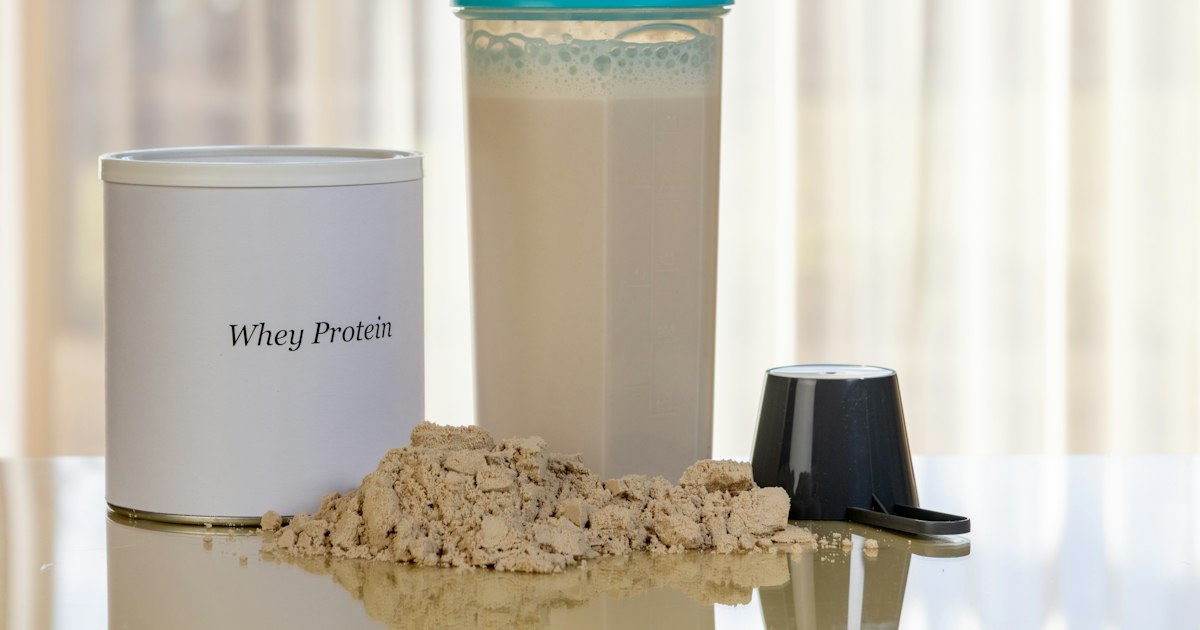
Whey protein is the protein fraction of milk that remains after making cheese and casein. It contains all twenty proteinogenic amino acids joined by peptide bonds into protein molecules: beta-lactoglobulin, alpha-lactalbumin, immunoglobulins, lactoferrin, whey albumin and other fractions.
So the first key difference: EAA is a “selection” of only the essential amino acids, while whey is a complete protein in which essential amino acids make up only part of the mass, roughly about half. The rest are nonessential amino acids, which the body can synthesize itself but which also take part in metabolism.
The second difference is the presence of bioactive components. Whey contains peptides and proteins with potential immunomodulatory properties. Their significance for sports results has not been proven, but this shows that whey is a food with a complex structure, whereas EAA is a set of individual “building blocks.”
| Parameter | EAA | Whey protein |
|---|---|---|
| Form of amino acids | Free | As part of protein molecules and peptides |
| Number of amino acids | 9 essential | All 20 proteinogenic |
| Need for digestion | Minimal | Proteolysis in the stomach and intestine |
| Bioactive fractions | None | Lactoferrin, immunoglobulins, etc. |
| Lactose | Absent | Present in concentrate, minimal in isolate |
| Taste | Bitter without flavoring | Neutral milky |
Digestion and speed of entry into the blood
Free amino acids do not require breakdown by enzymes, so after taking EAA their concentration in plasma rises very quickly and peaks earlier than after any whole protein. Such a “spike” is accompanied by an equally rapid decline: the amino acids are taken up by tissues or oxidized.
Whey protein is considered a “fast” protein compared with casein, because it does not curdle in the acidic environment of the stomach and quickly passes into the small intestine. Nevertheless it still needs a proteolysis stage, so the amino acid profile in the blood is longer and smoother than after free EAA.
Whey hydrolysate occupies an intermediate position: the protein is partly broken down into peptides already during manufacture. In the study by Tang and colleagues (2009) whey hydrolysate after training stimulated muscle protein synthesis more strongly than casein and soy isolate, which the authors linked to the speed of absorption and the leucine content.
It is important not to confuse the speed of appearance of amino acids in the blood with the amount of protein that ultimately “gets built into” the muscles. A fast peak is useful as a signal, but a sufficient and more prolonged supply of building material is needed for a sustained response.

Effect on muscle protein synthesis
The classic work of Tipton and colleagues (1999) showed that taking a small amount of essential amino acids after resistance training shifts the muscle protein balance into positive. The study by Volpi and colleagues (2003) in older people demonstrated that it is precisely the essential amino acids that are responsible for stimulating anabolism, and adding nonessential ones to them did not enhance the effect.
These results are often cited as proof of the superiority of EAA: the argument being, why pay for the nonessential amino acids in whey if only the essential ones work. The logic is partly correct — per gram of product, EAA are “denser” in essential amino acids. However, in real life a person compares not grams but servings and their results over weeks and months.
As for whey, the dose–response studies of Moore and colleagues (2009) and Witard and colleagues (2014) showed that after resistance training about 20 g of quality protein provides most of the possible synthesis response in young people, while 40 g gave only a modest additional increase. Whey is one of the best-studied proteins in this context.
There are few direct long-term comparisons of “EAA versus whey” measuring gains in muscle mass. Therefore the correct conclusion is this: both products are capable of stimulating muscle protein synthesis, but the evidence base for whey is much broader, while for EAA it is mostly acute metabolic studies.
Calorie content, tolerance, product forms
Since a serving of EAA is usually only a few grams, it adds almost no calories and does not create a feeling of fullness. This makes EAA convenient during training or for people who cannot eat a large volume. A whey serving of 25–30 g of powder is already a full small meal with calories and satiety.
Tolerance differs. Whey concentrate contains lactose, so people with lactase deficiency are better suited by isolate or hydrolysate. For people allergic to cow’s milk proteins, whey is contraindicated regardless of the degree of purification. EAA contain no milk allergens, but some people complain of a bitter aftertaste and stomach discomfort when taking free amino acids on an empty stomach.
- Whey concentrate:the cheapest, contains lactose and fat in small amounts.
- Isolate:higher protein content, minimal lactose.
- Hydrolysate:partly broken down, absorbed faster, more bitter and more expensive.
- EAA powders and capsules:without lactose, often with flavorings and sweeteners.
The cost per gram of essential amino acids is often comparable, but per gram of complete protein whey is almost always more advantageous. In addition, EAA rarely have the same amino acid profile across different manufacturers, whereas the composition of whey is more predictable.
Typical mistakes in comparison
The first mistake is comparing 10 g of EAA with 10 g of whey. In ten grams of whey there are roughly half as many essential amino acids, so such a comparison is artificially in favor of EAA. It is more correct to compare the usual servings that people actually consume.
The second mistake is to believe that a faster peak of amino acids automatically means greater muscle gain. Acute studies measure synthesis over a few hours, while muscle mass forms over weeks of training and nutrition.
The third mistake is to ignore total protein for the day. If a person meets their daily protein target from food, the difference between EAA and whey as a supplement becomes insignificant, because both only add a small share to an already sufficient diet.
The fourth mistake is not to take context into account: EAA during training and whey after it can coexist rather than compete. At the same time, in most cases one well-chosen supplement is sufficient.
Editorial conclusions
EAA are concentrated free essential amino acids with a very fast but short-lived entry into the blood and minimal calorie content. Whey protein is a complete dietary protein with a broader amino acid profile, bioactive fractions and a much larger evidence base.
At the level of metabolic studies both products stimulate muscle protein synthesis, and it is precisely the essential amino acids that are the “working” part of any protein. In practice, however, the difference is determined by serving size, tolerance, budget and the overall diet.
For most people whey remains a rational standard, while EAA are a niche tool for specific situations.
For information on who and in which situations should prefer each of the options, read the article “EAA vs Whey Protein: What to Choose and for Whom.” We also recommend the reviews “BCAA or Leucine: What Is the Difference” and “Glutamine or BCAA: What Is the Difference.”
References
- Tipton KD, Ferrando AA, Phillips SM, Doyle D Jr, Wolfe RR. Postexercise net protein synthesis in human muscle from orally administered amino acids. Am J Physiol. 1999;276(4):E628–E634.
- Volpi E, Kobayashi H, Sheffield-Moore M, Mittendorfer B, Wolfe RR. Essential amino acids are primarily responsible for the amino acid stimulation of muscle protein anabolism in healthy elderly adults. Am J Clin Nutr. 2003;78(2):250–258.
- Tang JE, Moore DR, Kujbida GW, Tarnopolsky MA, Phillips SM. Ingestion of whey hydrolysate, casein, or soy protein isolate: effects on mixed muscle protein synthesis at rest and following resistance exercise in young men. J Appl Physiol. 2009;107(3):987–992.
- Moore DR, Robinson MJ, Fry JL, et al. Ingested protein dose response of muscle and albumin protein synthesis after resistance exercise in young men. Am J Clin Nutr. 2009;89(1):161–168.
- Witard OC, Jackman SR, Breen L, et al. Myofibrillar muscle protein synthesis rates subsequent to a meal in response to increasing doses of whey protein at rest and after resistance exercise. Am J Clin Nutr. 2014;99(1):86–95.
- Jäger R, Kerksick CM, Campbell BI, et al. International Society of Sports Nutrition Position Stand: protein and exercise. J Int Soc Sports Nutr. 2017;14:20.
Andriy Melnyk
A strength-sports coach and author of programs for beginner and intermediate levels. Writes about training planning.