How to Choose a Quality Gainer: What to Look for on the Label
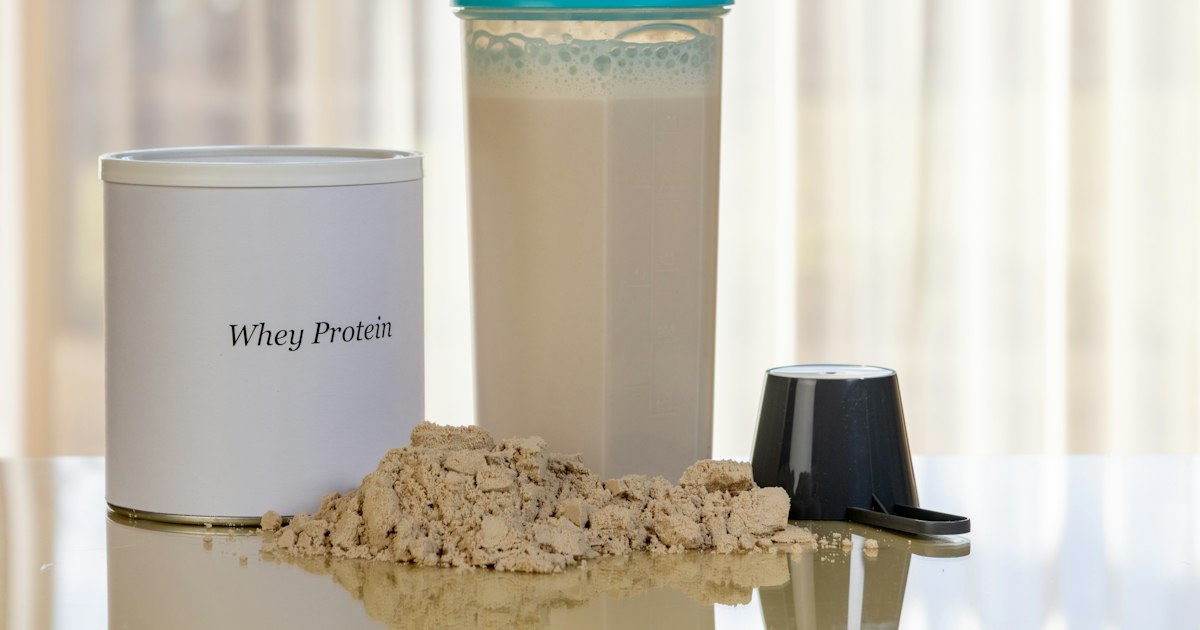
Gainers on the shelf look alike: big tubs, bright promises of “+5 kg of mass” and thousands of calories per serving. The real difference between them is hidden in the fine print of the label. The editorial team has put together a step-by-step breakdown that will help distinguish a quality blend from an expensive sweet powder.
Serving size and energy value
The first thing to start with is the serving size. Manufacturers define it differently: some list one scoop per 50 g, others four scoops per 330 g. Because of this, two tubs with formally identical “calories per serving” may differ in content by several times. Products can be compared correctly only when recalculated per 100 g.
According to EU Regulation No. 1169/2011 on the provision of food information to consumers, nutritional value must be given specifically per 100 g or 100 ml, and per serving — additionally. If the packaging has only “per serving” data, that is already a reason to look more closely at the product’s origin.
Next — the energy value. In most gainers it is approximately 370–400 kcal per 100 g of dry powder. Significantly higher figures are possible only with a high fat content (for example, with the addition of MCTs or vegetable oils), and this is worth taking into account.
Finally, assess how the declared serving relates to your needs. A serving of 1000–1200 kcal is suitable only for people with very high energy expenditure; most will have to divide it into parts.
Protein: how much and from what
The key indicator of a gainer’s quality is the share of protein in the total energy. Calculating it is simple: multiply the grams of protein by 4 kcal and divide by the total calorie content of the serving. If the result is below 15%, you have a mostly carbohydrate drink; 20–30% is a classic gainer; over 30% is a “protein” gainer.
No less important is the protein source. In the ingredient list, components are listed in descending order of mass, so if maltodextrin comes first and protein is somewhere in the middle, its share is small. Concentrate, isolate or hydrolysate of whey protein, caseinate, milk protein are considered better; among plant proteins — pea or rice.
Soy protein, gelatin or “hydrolyzed collagen” in the top positions among protein sources should be a red flag: they are cheap and have a poorer amino acid profile for muscle growth. Separately, it is worth paying attention to free amino acids (glycine, taurine) in the list — they are sometimes added to artificially raise the “protein” figure when analysis is done by nitrogen.
The ISSN position stand on protein (Jäger et al., 2017) emphasizes that the content of leucine and essential amino acids is important for stimulating muscle protein synthesis. If the manufacturer provides an amino acid profile, that is a positive sign of transparency.
Carbohydrates and sugars
The line “carbohydrates, of which sugars” on the label is the second most important. Maltodextrin is formally not a sugar, so a gainer with maltodextrin may have a low “sugars” figure but a high glycemic effect. A high share of sucrose, dextrose or fructose is visible directly in the sugars line.
| Carbohydrate source | Features | Assessment |
|---|---|---|
| Maltodextrin | Fast, neutral taste, cheap | Acceptable in moderate amounts |
| Dextrose, sucrose | Very fast, count as sugars | A small content is desirable |
| Fructose | Metabolized mainly by the liver | Large amounts undesirable |
| Oat flour, rice flour, starch | Slower, provide fiber | A positive sign |
| Cyclodextrins, isomaltulose | Specific “slow” carbohydrates | Acceptable, more expensive |
The World Health Organization (2015) recommends limiting free sugars to less than 10% of daily energy. One serving of a gainer high in sucrose can fill this limit completely, so people who drink the blend daily should pay attention to this line.
It is also useful to check the fiber content. In most gainers it is minimal, so the presence of 3–5 g per serving thanks to oats or other whole sources is an advantage.
Additional ingredients and allergens
Many gainers contain creatine, vitamin-mineral complexes, enzymes, MCT oil. This is not bad, but it is worth understanding what you are getting. Creatine, for example, is useful only if its dose per serving corresponds to the working range; a “dusting” of a few hundred milligrams has mostly marketing value.
- Allergens:milk, soy, gluten (in oat or wheat flour) must be highlighted in the ingredient list.
- Sweeteners:sucralose, acesulfame K, stevia — safe in permitted amounts, but they affect taste and digestion in sensitive people.
- Stimulants:caffeine, guarana, green tea extracts — in a gainer they are usually unnecessary.
- Thickeners and flavorings:xanthan gum, lecithin — standard technological additives.
For athletes who undergo doping control it is especially important to avoid products with “proprietary blends” that do not disclose the composition. The IOC consensus on dietary supplements (Maughan et al., 2018) reminds us that contamination with banned substances occurs even in products that formally have nothing to do with them.
Manufacturer, certification and signs of counterfeiting
The label must contain the name and address of the manufacturer or importer, the batch number, the production date or expiry date, and storage conditions. For products sold in Ukraine, mandatory information in the state language is required. The absence of these data, or a sticker covering the original labeling, is a serious warning sign.
Independent certification programs such as Informed Sport or NSF Certified for Sport test batches of products for the presence of banned substances. For an amateur this is not obligatory, but for an athlete subject to testing such a mark substantially reduces the risk.
The study by Geyer and colleagues (2008) showed that some dietary supplements on the market were contaminated or deliberately adulterated with doping substances. Although the main problems concerned other categories, the general principle of trust in the manufacturer is relevant for gainers too.
Practical signs of a dubious product: a price significantly below the market, errors in the label text, blurry printing, the absence of holograms or protective seals where the manufacturer provides them, and also an unusual smell, color or lumps in the powder.
Editorial conclusions
A quality gainer is defined not by the number of calories per serving but by its composition: a sufficient share of protein from complete sources, a moderate sugar content and a transparent ingredient list.
Compare products per 100 g, calculate the share of protein in the energy, check the order of ingredients and the manufacturer’s labeling.
Athletes who undergo doping control should choose products with independent certification.
We also recommend our articles “Gainer: Product Forms and Which to Choose,” “Gainer During Bulking: Is It Worth It” and “Myths About Gainers.”
References
- Регламент (ЄС) № 1169/2011 Європейського Парламенту та Ради від 25 жовтня 2011 року про надання харчової інформації споживачам. Official Journal of the European Union. 2011;L304:18–63.
- Jäger R, Kerksick CM, Campbell BI, et al. International Society of Sports Nutrition position stand: protein and exercise. J Int Soc Sports Nutr. 2017;14:20.
- Maughan RJ, Burke LM, Dvorak J, et al. IOC consensus statement: dietary supplements and the high-performance athlete. Br J Sports Med. 2018;52(7):439–455.
- Geyer H, Parr MK, Koehler K, et al. Nutritional supplements cross-contaminated and faked with doping substances. J Mass Spectrom. 2008;43(7):892–902.
- World Health Organization. Guideline: sugars intake for adults and children. Geneva: WHO; 2015.
- Kerksick CM, Wilborn CD, Roberts MD, et al. ISSN exercise & sports nutrition review update: research & recommendations. J Int Soc Sports Nutr. 2018;15:38.
Andriy Melnyk
A strength-sports coach and author of programs for beginner and intermediate levels. Writes about training planning.